
CURATED: MARBLE MATTERS
EDITION 04
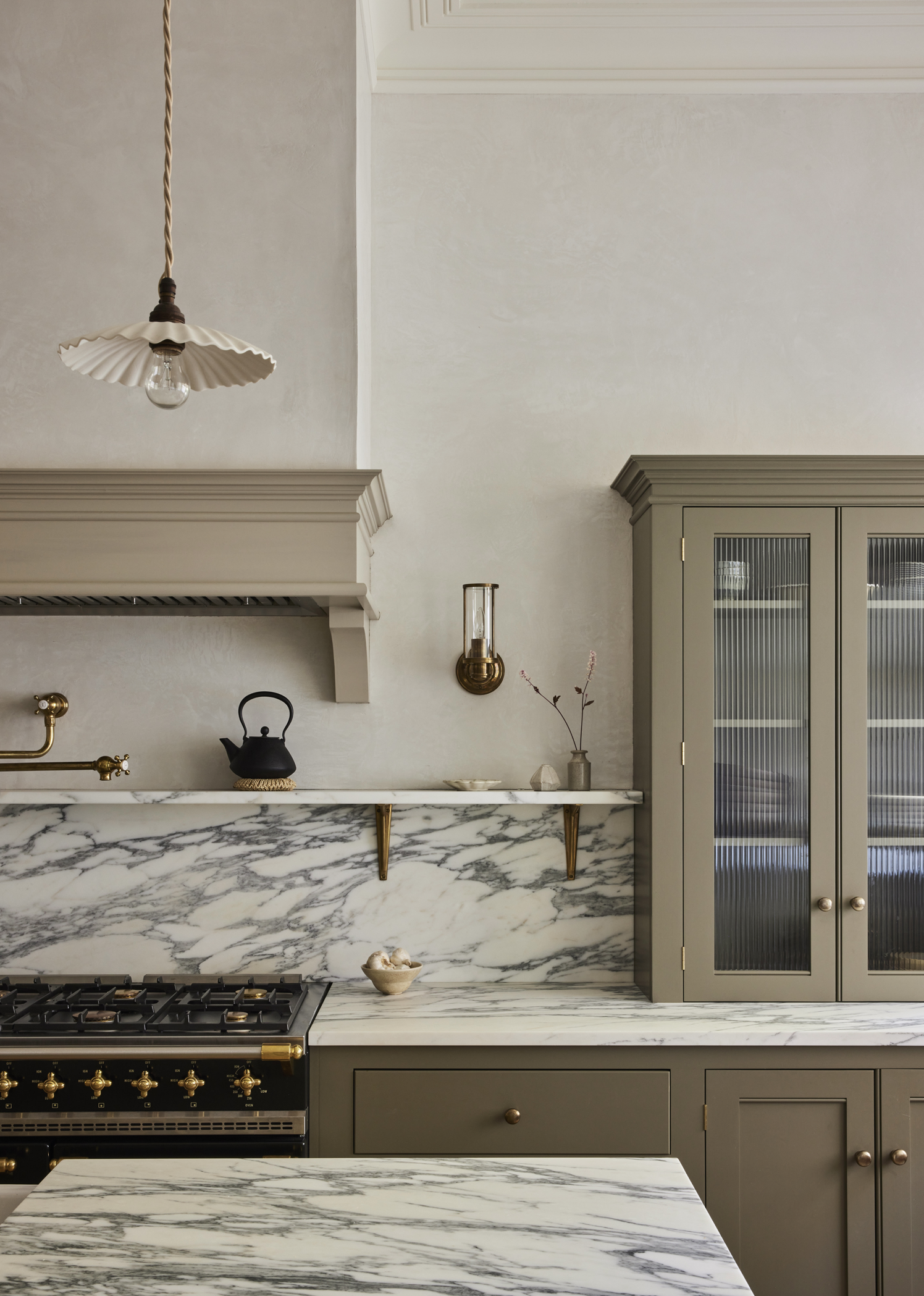
Arabescato Corchia worktop: Image courtesy of deVOL Kitchens
IF YOU LOVE the look of marble but you’ve been put off using it in your kitchen as a result of cautionary tales from industry ‘experts’, you’re not alone. Marble stains, they’ll tell you. It isn’t practical for everyday life. It scratches easily. It requires on-going maintenance.
Warnings about using marble as a kitchen surface have become the stuff of folklore in mainstream kitchen showrooms, parroted by generations of salespeople quoting the corporate manual. Sorry (not sorry).
It’s a ‘Marble 101’ playbook that leaves most people understandably reaching for the nearest sample of quartz.
But much of the advice around using marble in kitchens is second and third hand, not from people who’ve lived with it day to day.
And more significantly, it’s worth noting that marble presents a logistics problem for suppliers: it carries greater breakage risk in transit because it’s brittle, requiring specialist handling that leaves no room for cheap labour and fast installs.
So, the mass-market kitchen companies generally don’t offer it, declaring it unsuitable for kitchen countertops.
Almost every single (kitchen) client I’ve worked with has come to me specifying a marble-effect worktop for their kitchen, admitting they’d prefer to have real marble, but believe it’s too much of a risk.
I do, of course, get it.
You’re about to invest tens of thousands of pounds in a brand-new kitchen; you’ll be damned if it means giving up red wine and your Friday night curry.
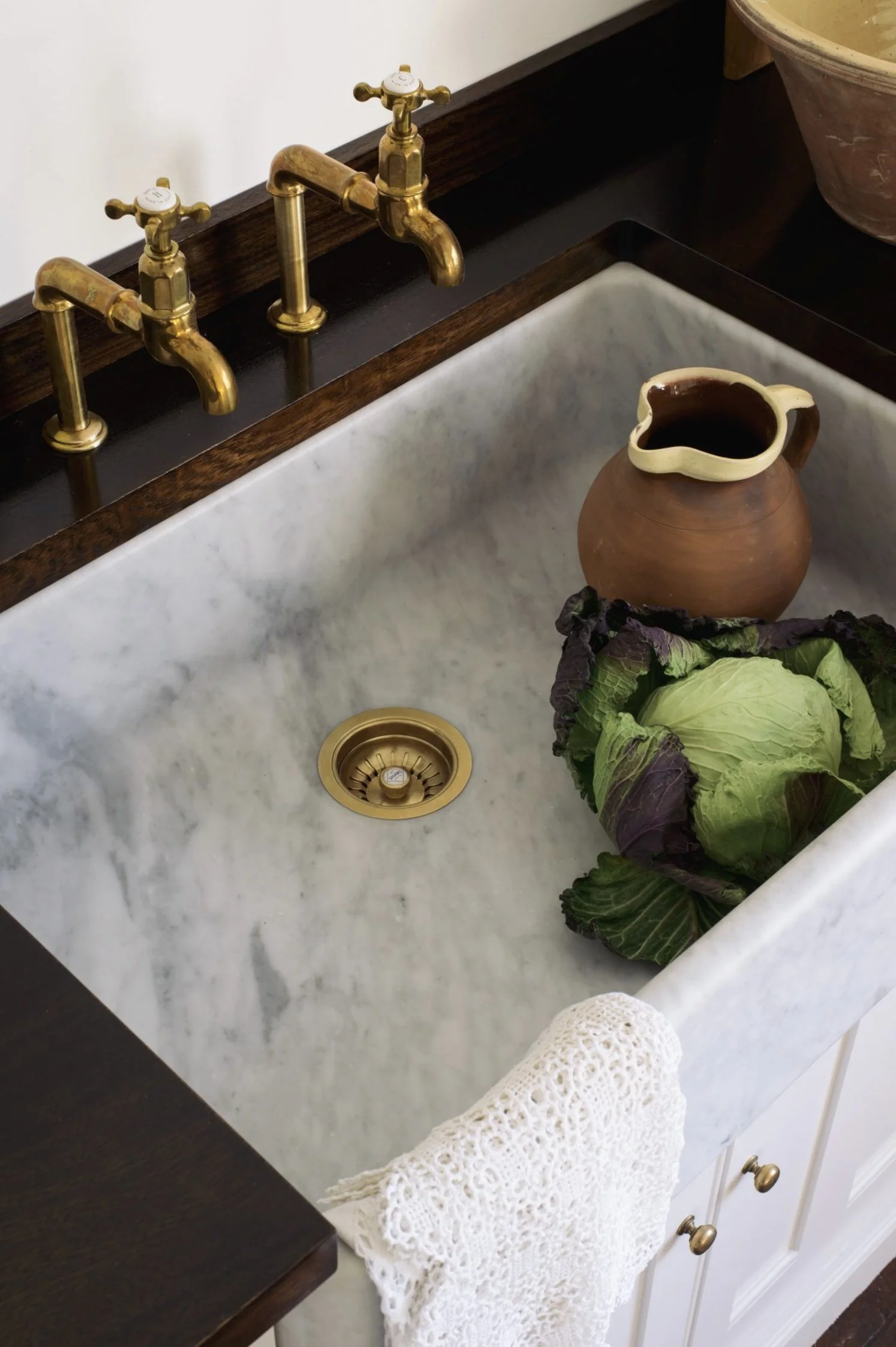
Farmhouse sink in Carrara marble: Image courtesy of deVOL kitchens
If marble was a minority group, it would have its own acronym and thriving active rights campaign.
In fact, I’m starting one. Let’s call it ‘Marble Matters.’
Marble is a natural material formed when limestone is subjected to heat and pressure over millions of years. It’s been the material of choice for sculptors and architects for centuries.
Its enduring appeal lies in its beauty. No two slabs are ever identical; subtle veining, natural fissures and a gentle translucency give the stone a depth and softness that changes with the light throughout the day. It's a material that feels both timeless and alive, carrying the character of something formed by nature rather than manufactured in a factory.
In its early form, marble is soft and malleable, enabling sculptors to craft in breath-taking detail. In time, a hardened exterior forms making it extremely durable but also brittle.
It's not dissimilar to glass, it will last forever - unless you drop it, which is why many mainstream kitchen retailers and countertop fabricators won’t work with it.
Some years ago, I found a marble off-cut in a stone yard that was perfect for a bathroom vanity I was working on. As the yard was nearby, and the piece would easily fit in the boot of my car, I opted to collect it in person.
On the way back with my purchase, I sailed rather enthusiastically over a speedbump, and as I came down the other side, I heard an unmistakable crack as the marble slab reconnected with the base of the boot.
I returned to the yard red-faced, but the staff there accepted full responsibility for the damage, saying they should not have let a customer collect a piece of marble without wrapping it for transit.
They replaced it for free, but lessons had been learned all round.
If transporting and handling marble is logistically complex - that’s a retailer issue, not a consumer one.
Once in place, marble is incredibly durable. At time of writing the Taj Mahal, the Pantheon and Marble Arch are still standing.
Which brings us to the elephant in the room.
If marble can withstand centuries of inclement weather and pollution once in situ, why not the daily grind of a family kitchen?
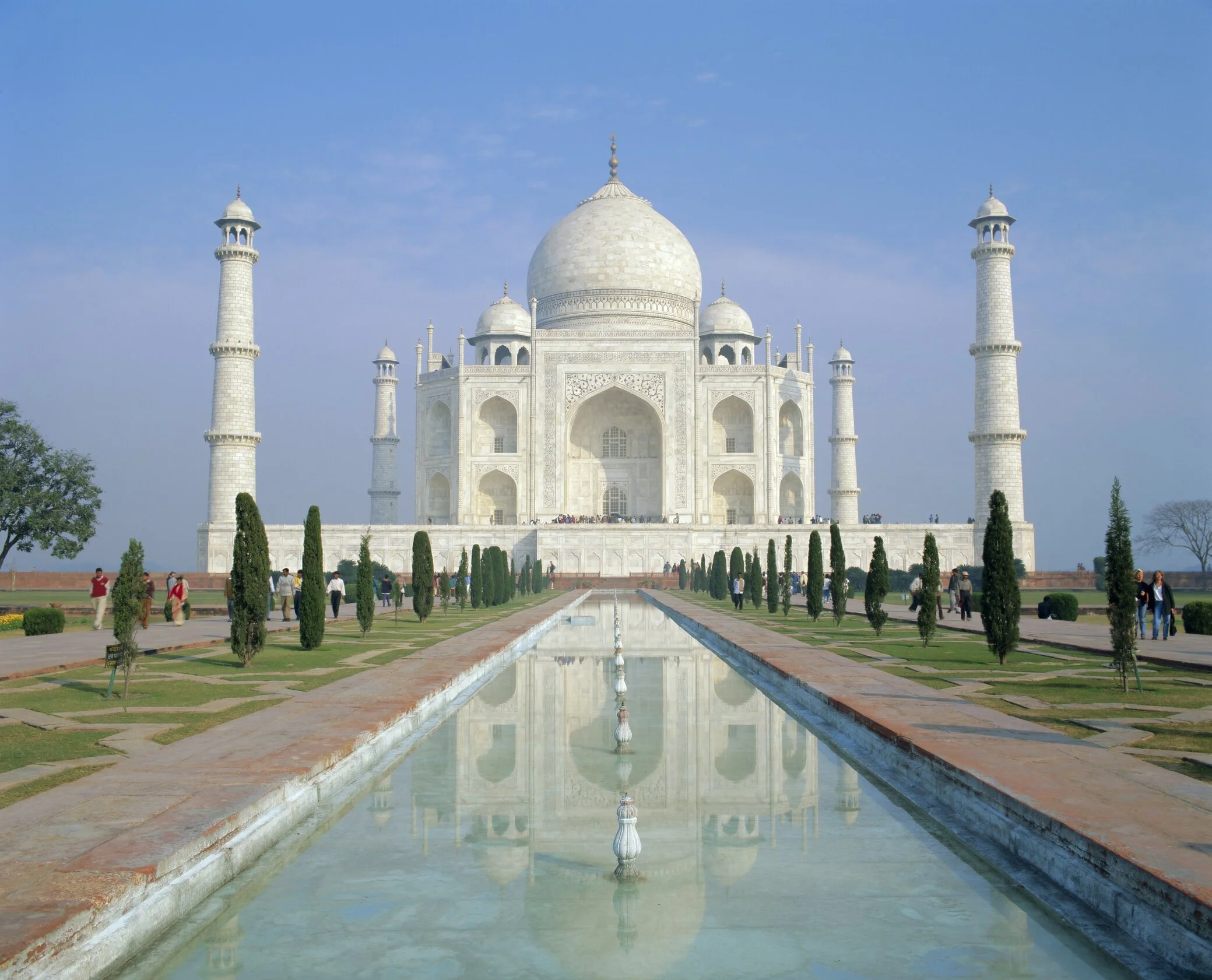
The Taj Mahal, built between 1632-53, constructed of white Makrana marble
The root of marble’s poor reputation is in its microscopic pores, which can absorb liquids if they are left on the surface for prolonged periods. Red wine, coffee, cooking oils and high pigment foods - turmeric, beetroot – can penetrate the stone and cause staining.
But liquid absorption is slow, and marble worktops, just like granite, should be sealed on installation to prevent absorption.
This so-called ‘high-maintenance’ material simply requires wiping with a cloth. Ideally, when spills occur.
Dare I say, this feels remarkably low-effort in a room where a basin and a J-cloth are standard issue, particularly when compared to, say, checking the tyre pressure on your car, or changing the engine oil. I don’t believe motoring maintenance tasks are flagged as on-going challenges of car ownership by showroom salespeople, although they most certainly feel like it when they come around.
While water doesn’t stain marble, it can cause temporary darkening as moisture is absorbed, and repeated exposure may contribute to mineral deposits in hard-water areas. Yet marble has been used in baths, fountains and water features for thousands of years. From the Trevi Fountain in Rome to the Fountains of Versailles, many of the world's most celebrated water monuments are in service centuries on, demonstrating that water itself is not inherently destructive to marble.
Again, sealing at installation will help prevent water absorption. Sealant can be topped up every 2-3 years, applied in a circular motion with a microfibre cloth.
Water should pool on the surface of marble; if it starts to sink in, it’s a signal that it’s time to reseal.
Surface etching can occur when acidic substances - lemon juice, vinegar, wine & the wrong cleaning products - come into contact with marble and, again, if not wiped up, react with the calcium carbonate in the stone, slightly dulling the surface.
Etching is practically indiscernible on honed marble, as opposed to polished, because the surface is already matt. Etch marks appear more visible when viewed at eye-level, from certain angles, as light reflects differently off the dulled surface.
I recently dropped in to visit clients who were opting to have their Arabescato marble kitchen worktop professionally resurfaced, four years after we recommended and installed it.
They had told me: “With regards to our marble worktops - we love them! At first, we were SO nervous about coloured food and wine, but in reality it's been absolutely fine. The one thing we will say is limescale or ring marks ‘texture’ rather than colour and while we haven’t had the worktops resurfaced yet, we’re thinking of doing so.”

My clients’ Arabescato marble worktops
On arriving in their kitchen I couldn’t see a single stain or etch mark on the honed countertop; it was only when encouraged to crouch down and view the stone at eye-level, from different angles, that one or two duller patches became apparent.
While the worktop certainly didn’t look in need of professional restoration (see before & after videos below) it was fascinating to watch the surface restored in just over two hours to ‘as-new’ condition, something that was important to my clients and which in fact introduces an interesting perspective to the general debate.
Marble can be fully resurfaced, as often as desired, over centuries of use. Yet it seems to trouble mass-market kitchen folk more than quartz which can be scorched or cracked by a hot pan, and once damaged, is forever irreparable.
My clients’ countertop before professional resurfacing (above) and immediately afterwards (below)
As it is formed organically under intense heat and pressure, Marble is naturally heat resistant, which is one of the reasons it has been used around fireplaces for centuries.
Even with timely wiping, and occasional resealing, marble is destined to develop a natural patina over the years. Rather than detracting from its beauty, many consider subtle signs of use part of its appeal and a desirable characteristic.
Full resurfacing is always an option, if not.
The depth, softness, movement and natural variation of marble is impossible to replicate.
Marble-effect worktops achieve varying levels of success, in my honest opinion. At the high end, marble-effect porcelain from brands such as Sapien Stone are visually very convincing, but, at a price point in line with actual marble, I’d recommend the real thing, every time.
On the quartz front, perfectly uniform pattern repeats, veining that is obviously printed, an absence of fissures and variation and general lack of translucency and tactility in the surface are just some of the cues that giveaway a marble-look quartz slab.
These marble-inspired worktops are becoming increasingly popular as an alternative to the real thing, as the absence of marble from mainstream showrooms continues to drive the perception that it is unsuitable for kitchens.
Meanwhile premium kitchen companies continue to specify marble routinely, supporting the view that marble's absence from the mass market is not about suitability but shaped by the mainstream industry’s preference for materials that are quick and easy to transport, cut and install at scale and which create a low-risk framework for warranties.
Marble Restoration Specialists: Athena Stonecare
Porous Stone Sealant : P147 Plus
Ph Neutral Cleaner: granite + marble cleaner